
Multiple New California Laws Are Now in Effect for 2026 and What They Mean After a Crash
New California laws are now in effect for 2026, and several touch traffic safety, impaired driving, and emerging road technology. This guide breaks down the key bills and why they matter for proving fault, preserving evidence, and protecting your right to compensation after a crash.
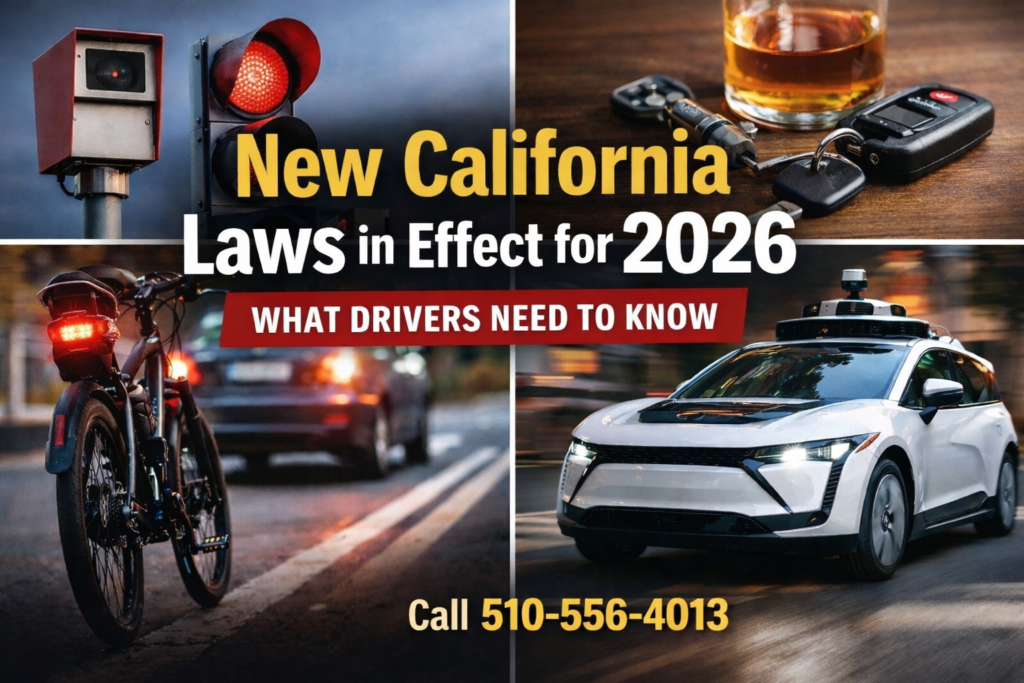
Multiple new laws are now officially in effect here in California for 2026, and several of them touch traffic safety, impaired driving, and how enforcement and motor vehicle insurance issues may play out after a motor vehicle collision. If you drive in the San Francisco Bay Area, you have probably already felt how quickly a normal commute can turn into a serious motor vehicle accident, especially in stop and go traffic, at onramps, and in dense urban corridors. The legal side of a crash often comes down to details: what the rules were, what documentation exists, and how fast a motor vehicle insurance company tries to shape the story. These 2026 changes matter because they affect how people drive, how some violations are enforced, and how new technology and safety standards show up on the road.
Before we dive in, a quick clarification. You may see lists floating around that group AB 250, AB 489, and SB 1053 into the same “traffic” bucket. In reality, those three (3) are not traffic injury laws in the same way SB 720, AB 1087, AB 544, and AB 1777 are. AB 250 is about a civil claims revival window for certain adult sexual assault cases, AB 489 addresses deceptive terms in health care communications including AI, and SB 1053 is about checkout bag rules.
SB 720 and the Return of Automated Red Light Enforcement
SB 720 authorizes local governments to opt into an automated traffic enforcement program that uses systems to detect red light violations and applies escalating civil penalties when the system records a violation. If your city opts in and deploys these systems, you can expect more camera based enforcement at intersections, especially in high volume corridors. For drivers, the practical takeaway is simple: more intersections may be monitored, and more violations may be documented by camera. For bodily injury cases, documentation matters. When a crash happens at an intersection, one of the first (1st) questions is often who had the right of way and whether a signal was obeyed. Automated systems can sometimes create additional evidence trails that show timing, lane position, and the sequence of events.
AB 1087 and Harsher Consequences When Impaired Driving Leads to Death
AB 1087 increases the probation term from two (2) years to between three (3) and five (5) years for people convicted of vehicular manslaughter or gross vehicular manslaughter while intoxicated. The human part of this is the point. Impaired driving collisions are some of the most devastating motor vehicle accidents we see, because the harm is often preventable and the bodily injuries are often catastrophic. From an bodily injury claim standpoint, these cases require careful handling because the damages are typically significant, medical treatment is extensive, and families may be facing a long recovery or life changing loss. This law is part of the larger California trend toward tougher consequences when DUI behavior results in fatal outcomes.
AB 544 and E Bike Rear Visibility Requirements
AB 544 requires electric bicycles to have a rear red reflector or rear red light with a built-in reflector during all hours, not only at night. This matters because e-bikes are now part of everyday traffic, and visibility issues show up in serious bodily injury crashes involving cyclists, pedestrians, and drivers. When a collision occurs, insurance carriers often try to reduce responsibility by focusing on visibility, equipment, and what a rider should have had on the bike. AB 544 makes the expectation clearer for e-bike riders, and it gives law enforcement a more defined standard.
AB 1777 and New Rules for Driverless Autonomous Vehicles
AB 1777 creates additional requirements for autonomous vehicles that operate without a human operator physically present in the vehicle, starting July 1, 2026. One key piece is first responder interaction: manufacturers must provide a dedicated emergency response line and equip vehicles with a two (2) way voice communication device so emergency officials near the motor vehicle can communicate effectively with a remote human operator. If you have ever watched a confusing scene after a crash, you know how important quick coordination is. These requirements are designed to reduce chaos and improve safety when a driverless vehicle is involved in an incident, stops in a traffic lane, or creates a hazard. For bodily injury claims, autonomous motor vehicle collisions often raise questions that do not exist in normal crashes, such as who controlled the motor vehicle, which systems were active, what remote response occurred, and what data exists. The more structure the law requires, the easier it can be to trace what happened.
Where This Leaves Injured Drivers, Passengers, Cyclists, and Families
If you are reading this after a crash, here is the reality. New laws do not automatically make insurance companies easier to deal with. Adjusters still move fast, and they still try to minimize a bodily injury or bodily injuries, especially in rear-end collisions where they assume whiplash means “minor.” The difference is that evidence and standards matter more than ever. Whether your motor vehicle accident involves impaired driving, intersection enforcement, e-bikes, or new motor vehicle technology, the smartest move is to protect the claim early. That means getting medical care when you need it, documenting symptoms as they develop, keeping photographs, keeping videos, preserving any app or trip details if a rideshare was involved, and avoiding rushed statements before you understand the full impact.
At The Jagroop Law Office, Inc., we help bodily injury victims take control of the process after a crash. If you were hurt in a motor vehicle accident anywhere in California and you want clear answers without legal jargon, call 510-556-4013. We will explain what these issues mean for your situation, and how to protect your right(s) to full monetary compensation under California law.
